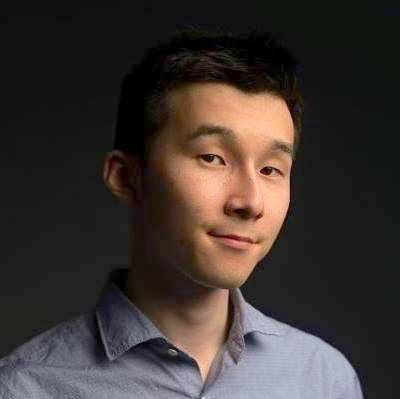
I am interested in soft and living matter where physics, chemistry, and biology intersect.
Biomolecular Condensates
Biomolecular condensates are membraneless organelles that play critical roles in cellular processes. Despite their importance in cellular physiology, the thermodynamics of biomolecular condensates remains poorly understood. My research in this area focuses on understanding the thermodynamics of biomolecular condensates and how enzymatic reactions can control their formation and material properties.
![[Biomolecular Condensates]](https://tmatsuzawa.github.io/images/research/1_Biomolecular_Condensates.png)
![[Confined Turbulence]](https://tmatsuzawa.github.io/images/gallery/7_Active_Condensates.png)
Relevant publications include:
- Metabolites Shift Equilibria of Biomolecular Condensates
T. Matsuzawa, K. Varma, T. Bate, C. Lorenz, K. Larina, J. Bauermann, D. Matthias, T. Grubi´c, R. W. Style, M. O. Steinmetz, E. R. Dufresne, bioRxiv 10.64898/2026.01.14.699531 (2026). Link (Under review) - Partition Coefficients Reveal Changes in Properties of Low-Contrast Biomolecular Condensates
K. Varma, D. Matthias, C. B. Shapiro, S. Bailey-Darland, T. Matsuzawa, C. Lorenz, T. Bate, S. J. Thornton, S. Duraivel, R. W. Style, J. P. Sethna, E. R. Dufresne, bioRxiv 10.64898/2026.02.20.707107 (2026). Link (Under review)
Core competencies: Microscopy, rheology, protein purification, optical trapping, enzymatic reactions, solution thermodynamics, numerical simulations (Monte Carlo, molecular dynamics), data analysis (Python, C++, MATLAB)
Turbulence
Turbulence has been considered one of the last unsolved problems in classical physics. Its nonlinear and multi-scale nature hinders our understanding. The last decade has been marked by great progress on this problem both experimentally and theoretically. My research in this area focuses on turbulence generated by repeatedly colliding vortex rings. The resulting blob of turbulence is confined and sustained, allowing us to study the transition into a confined state of turbulence, the decay and propagation of turbulence, and the role of helicity in turbulence.
![[Confined Turbulence]](https://tmatsuzawa.github.io/images/gallery/1_Confined_Turbulence.png)
![[Confined Turbulence]](https://tmatsuzawa.github.io/images/gallery/2_Decay_and_Propagation_of_Turbulence.png)
Relevant publications include:
- Nonlinear diffusion and decay of a blob of turbulence spreading into a quiescent fluid
T. Matsuzawa, M. Zhu, N. Goldenfeld, W. T. M. Irvine, Proc. Natl. Acad. Sci., 123, 7, e2526858123, (2026). [Link]; selected for cover image. - Creation of an isolated turbulent blob fed by vortex rings
T. Matsuzawa, N. P. Mitchell, S. Perrard, W. T. M. Irvine, Nature Physics, 19, 1193–1200 (2023). [Link]; selected for cover image. - Turbulence through sustained vortex ring collisions
T. Matsuzawa, N. P. Mitchell, S. Perrard, W. T. M. Irvine, Physical Review Fluids, 8, 11507 (2023). [Link]
Media coverage of this work includes:
- Selected for Research Highlight in Nature
- “Tempest in a teacup: Physicists make breakthrough in creating turbulence”, Phys.org
- Featured in Quanta Magazine
Core competencies: 2D particle image velocimetry, 2D particle tracking velocimetry, 3D particle tracking velocimetry, flow visualization, rapid prototyping, CAD, GPU computing, numerical simulations (Gross-Pitaevskii simulations, cell dynamical simulations), data analysis (Python, C++,MATLAB)
Active Matter
Active matter is a class of nonequilibrium systems that consume energy to generate motion. My research in this area focuses on the active matter in 3D at intermediate Reynolds numbers, a regime that has been largely unexplored.
![[Spinners]](https://tmatsuzawa.github.io/images/gallery/3_Active_Matter.png)
Relevant publications include:
- Self-propulsion, flocking and chiral active phases from particles spinning at intermediate Reynolds numbers
P. Chen, S. Weady, S. Atis, T. Matsuzawa, M. Shelley, W. T. M. Irvine, Nature Physics, 21, 146–154 (2025). [Link]; selected for cover image.
Core competencies: 2D particle image velocimetry, 3D particle tracking velocimetry, flow visualization, data analysis (Python)
Past Projects
Machine Learning for Fluid Mechanics
I collaborated with Gordon Kindlmann (UChicago), William Irvine (UChicago), and Zhuokai Zhao (Currently at Meta) to apply machine learning for improving velocimetry.
Relevant publications include:
- Evaluating machine learning models with NERO: non-equivariance revealed on orbits
Z. Zhao, T. Matsuzawa, W. T. M. Irvine, M. Maire, G. L. Kindlmann, NeurIPS Workshop on Interpretable AI (2024). [Link]
Core competencies: machine learning, data analysis (Python), vortex dynamics, fluid mechanics
Targeting studies of the Mu2e experiment (High-energy physics)
The mu2 experiments looks for a signature of new physics that breaks the Standard Model (charged lepton flavor violation for experts). I carried out studies of targeting beam at the Mu2e production target using a software called G4beamline, through the solenoidal field, both in the current configuration and in proposed upgrade scenarios.
Relevant publications include:
- Targeting Studies of the Second-Generation Mu2e Experiment
T. Matsuzawa, T. J. Roberts, E. Prebys, Fermi National Accelerator Laboratory, 2015. [Link] (Internal)
Modeling Synaptic Plasticity of Alzheimer's Disease (Computational Neuroscience)
Hebb famously said “Fire together, wire together” to describe learning in synaptic networks. If so, what causes Alzheimer’s patients to lose their ability to learn? In collaboration with Prof. Peter Erdi (Kalamazoo College), we developed a calcium-dependent model of synaptic plasticity that accounts for the effects of amyloid-beta on learning.
Relevant publications include:
- Multi-scale modeling of altered synaptic plasticity related to amyloid β effects
T. Matsuzawa, L. Zálanyi, T. Kiss, P. Érdi, Neural Networks, 93, 230–239 (2017). [Link] - Connecting epilepsy and Alzheimer’s disease: Modeling of normal and pathological rhythmicity and synaptic plasticity related to amyloid β effects
P. Érdi, T. Matsuzawa, T. John, T. Kiss, L. Zálanyi (Book chapter). [Link]