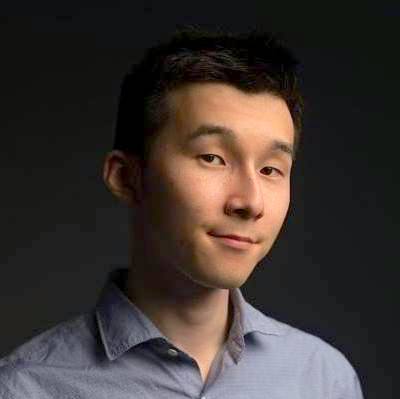
We are launching a new experimental research group in the School of Mechanical and Aerospace Engineering (MAE) at Nanyang Technological University (NTU), Singapore, starting in January 2027.
We are recruiting curious and motivated researchers at all career stages to join the founding team.
Prospective PhD students seeking admission in August 2027 are encouraged to contact Takumi (tmatsuzawa@cornell.edu) early and submit an application through the NTU MAE PhD admissions portal.
RESEARCH AREAS
Our research explores the physics of soft matter and complex fluids, from inanimate to living systems, with interests spanning experimental biophysics, fluid mechanics, and nonequilibrium physics.
CURRENT RESEARCH DIRECTIONS
[01] Active Biomolecular Condensates
Biomolecular condensates are dynamic, membraneless compartments that organize biochemical processes within cells. We investigate how enzymatic reactions control their formation, dissolution, and material properties, and how the physical properties of condensates, in turn, regulate chemical activity.
Our broader goal is to understand the coupling between phase separation, chemical reactions, and material properties in living systems.
[02] Turbulence
Turbulence promotes mixing, while phase separation drives the formation and growth of distinct fluid domains. We investigate how these competing processes influence one another in multicomponent fluids.
Our goal is to understand how turbulence modifies phase separation and how the resulting concentration gradients and interfaces feed back on turbulent flows.
[03] Cloud and Aerosol Physics
Cloud formation and aerosol dynamics involve a complex interplay of phase transitions, turbulent transport, and chemical processes. Despite their importance for weather and climate, the underlying physical mechanisms remain challenging to predict.
We are interested in laboratory investigations of how fluid motion, condensation, and chemical activity collectively influence cloud and aerosol formation.
Open Positions
PhD Students — August 2027 Intake
We welcome applications from students with backgrounds in physics, chemistry, biology, engineering, materials science, or related disciplines.
Prior experience in experimental research, numerical simulations, or scientific programming is an advantage but is not required. We particularly value scientific curiosity, creativity, and a willingness to learn across disciplines.
PhD positions are expected to be fully funded, subject to admission and funding confirmation through NTU.
Postdoctoral Researchers — Rolling Applications
We welcome applications for postdoctoral positions on a rolling basis, particularly in two broad areas:
- Experimental Biophysics: Biomolecular condensates, phase separation, and active soft matter. Candidates with experience in protein expression and purification are particularly encouraged to apply.
- Experimental Fluid Mechanics: Turbulence, multiphase flows, and reactive flows. Experience with event-based cameras is an advantage.
Applicants should hold a PhD in physics, engineering, biophysics, or a related discipline and demonstrate a strong record of experimental research.
We particularly welcome researchers interested in developing new experimental approaches and pursuing independent scientific ideas within a collaborative environment.
How to Apply
Interested candidates are encouraged to contact tmatsuzawa@cornell.edu with a brief introduction, a CV, and a summary of their previous research experience and interests.
Prospective PhD students should also submit a formal application through the NTU MAE PhD admissions portal.
Funding and Scholarships
In addition to research positions supported by the group, prospective students and postdoctoral researchers may consider the following scholarship and fellowship opportunities. Eligibility, funding duration, and application procedures are subject to the respective programs’ requirements.
For Graduate Students
- Nanyang President’s Graduate Scholarship: Funding for up to four years of PhD study.
- NTU Research Scholarship: Funding for up to four years of PhD study.
- Hermes-Epitek Innovation Scholarship: For full-time research master’s students who are Singapore citizens.
- Lee Kuan Yew Scholarship: Funding for master’s (up to two years) or PhD studies (up to five years). Open to Singapore citizens. Applications are submitted through the PSC portal.
- PSC Master’s Scholarship: Funding for up to two years of master’s study. Open to Singapore citizens.
For Postdoctoral Fellows
- Schmidt Science Fellowship: Funding for up to two years. Applicants must pursue a significant disciplinary pivot from their PhD research.
- NTU Presidential Postdoctoral Fellowship: Two-year fellowship for researchers within five years of their PhD award.
- NTU AI-for-X Postdoctoral Fellowship: Four-year fellowship for researchers within three years of their PhD award.
- Lee Kuan Yew Postdoctoral Fellowship: Funding for three years.
- Eric and Wendy Schmidt AI in Science Postdoctoral Fellowship: Two-year fellowship for researchers within three years of their PhD award.
- EMBO Postdoctoral Fellowship: Funding for two years. Applicants must have obtained, or be obtaining, their PhD outside Singapore, subject to the program’s eligibility requirements.
- JSPS Overseas Research Fellowships: Two-year support for eligible early-career researchers with Japanese nationality or permanent residency in Japan to conduct research at an overseas institution. PhD degree timing and other eligibility requirements apply.